
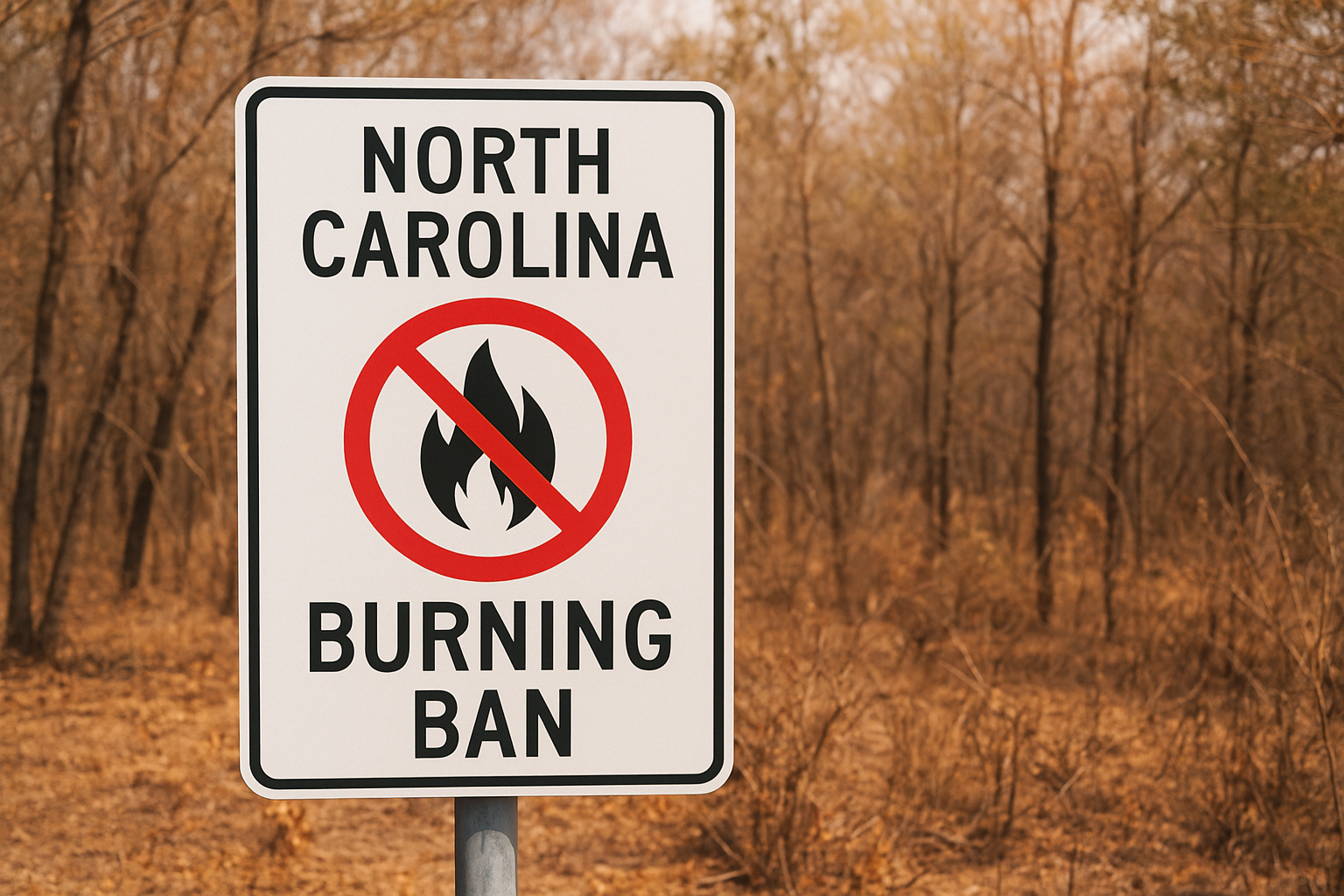
North Carolina Burning Ban: Rules, Restrictions, and Safety Guidelines
Understanding the North Carolina Burning Ban
The North Carolina burning ban is a legal measure that temporarily restricts or prohibits open burning activities across the state. These bans are implemented to reduce the risk of wildfires, protect air quality, and ensure public safety during periods of dry weather, high winds, or poor air conditions.
The burning ban is not a permanent law but a temporary emergency rule enforced when environmental or weather conditions make outdoor fires unsafe. It applies to all residents, including homeowners, farmers, and landowners who typically engage in burning vegetation or debris on their property.
The Purpose of the Burning Ban
Preventing Wildfires
North Carolina’s diverse landscape—ranging from coastal plains to mountain forests—can become extremely dry during certain times of the year. Under these conditions, a single spark from a backyard fire can ignite a massive wildfire. The burning ban aims to prevent such disasters before they start.
Protecting Air Quality
Smoke from open burning releases fine particles and chemicals that can harm the environment and public health. During a ban, restrictions help limit pollution, especially when air quality levels are already low. This ensures cleaner air and safer living conditions for everyone.
Ensuring Public Safety
By enforcing a statewide or county-specific burning ban, authorities protect homes, farmlands, and forests from accidental fires that could quickly spread and cause extensive damage.
Legal Foundation of the North Carolina Burning Ban
The Open Burning Rule
Open burning in North Carolina is regulated under 15A NCAC 2D .1900, also known as the Open Burning Rule. This rule defines what materials can and cannot be burned, who can issue permits, and the penalties for violations.
A simple phrase summarizes the rule’s core idea:
“If it doesn’t grow, don’t burn it.”
This means that only natural, untreated vegetation—like leaves, twigs, or tree limbs—can be burned under normal circumstances. Everything else, including trash, plastics, construction materials, tires, and treated wood, is always illegal to burn, even when no ban is in effect.
Authority to Enforce Bans
The North Carolina Forest Service (NCFS), in cooperation with the Department of Environmental Quality (DEQ), has the power to issue or lift burning bans. Local fire marshals and county governments can also establish their own restrictions based on local fire conditions.
When Is a Burning Ban Issued?
Weather-Related Conditions
A burning ban is typically issued during:
-
Extended dry weather or drought conditions
-
High wind events that can carry embers far from the fire source
-
Low humidity levels that make vegetation more flammable
-
Periods of poor air quality caused by pollution or smoke buildup
When these factors combine, the likelihood of wildfires increases dramatically, prompting officials to issue a temporary statewide or county-specific ban.
Duration of the Ban
The length of a burning ban varies depending on weather conditions. It may last for several days or continue for weeks until moisture levels, humidity, and wind speeds return to safe levels. The ban is lifted only when state and local agencies determine it is safe to resume open burning.
What Activities Are Prohibited During a Burning Ban?
When a North Carolina burning ban is in place, the following activities are generally prohibited:
-
Burning of yard debris such as leaves, branches, and brush
-
Campfires, bonfires, and fire pits using wood or debris
-
Agricultural burning for clearing fields or land
-
Construction or demolition waste burning
-
Any fire within 100 feet of an occupied dwelling, unless otherwise specified by local ordinance
Even if you previously obtained a burn permit, it becomes invalid during a ban. Starting or continuing a fire while the ban is active is considered a violation of state law.
Exceptions to the Burning Ban
Certain small, controlled fires may be allowed under specific conditions, though these are rare during active bans. Examples include:
-
Cooking fires using gas or charcoal grills
-
Warming fires in designated areas under supervision
-
Industrial operations with approved safety measures
However, local fire departments or forestry offices have final authority, and all residents should confirm whether an activity is exempt before proceeding.
Penalties for Violating the Burning Ban
Violating a burning ban in North Carolina carries serious consequences. Authorities treat such violations as both environmental and public safety offenses.
Fines and Legal Actions
-
Civil penalties can reach up to $25,000 per day for major violations.
-
Individuals may be held financially responsible for any property damage or firefighting costs.
-
Criminal charges can be filed in severe cases, especially if the illegal burn causes injury or destruction.
Enforcement
The North Carolina Forest Service, DEQ, and local law enforcement agencies have the authority to investigate and fine offenders. In some cases, the fire department may extinguish the fire immediately at the violator’s expense.
Safety Guidelines When the Ban Is Not in Effect
Even when no burning ban is active, residents must follow strict safety rules when burning is allowed. Safe practices include:
Before Burning
-
Always check local regulations and weather conditions.
-
Obtain a valid burn permit from the North Carolina Forest Service.
-
Clear the area of dry leaves, grass, and flammable materials.
-
Keep a water source or fire extinguisher nearby.
During Burning
-
Burn only natural vegetation like leaves and branches.
-
Never leave the fire unattended.
-
Do not burn if wind speeds exceed 10 mph.
-
Ensure the fire is completely extinguished before leaving the area.
After Burning
-
Check for embers or smoke for several hours afterward.
-
Avoid burning late in the day, as cooler temperatures and low visibility can make fires harder to control.
Environmental Benefits of Complying with the Ban
Following the North Carolina burning ban isn’t just about avoiding penalties—it helps protect the state’s natural environment and communities.
Reduced Air Pollution
Smoke from illegal or unsafe burning releases pollutants like carbon monoxide and fine particulates, which contribute to smog and respiratory illnesses. Compliance keeps the air cleaner and healthier for everyone.
Wildlife Protection
Wildfires caused by unsafe burning can destroy animal habitats. Observing bans helps preserve ecosystems and reduces harm to North Carolina’s native wildlife.
Community Safety
Preventing uncontrolled fires protects homes, schools, and public lands from damage, saving millions in property loss and firefighting expenses each year.
Key Takeaways
-
The North Carolina burning ban is a temporary restriction aimed at preventing wildfires and protecting air quality.
-
It prohibits all open burning, including debris, yard waste, and bonfires.
-
Only state and local authorities can issue or lift a burning ban.
-
Violations can result in fines up to $25,000 and potential legal action.
-
Always check with your county fire marshal or forest service office before burning anything.
-
Even when the ban is lifted, follow safety measures to prevent accidental fires.
Conclusion
The North Carolina burning ban serves as a vital safeguard for both the environment and the public. By respecting these restrictions, residents play a crucial role in preventing wildfires, protecting air quality, and ensuring the safety of their communities.
Remember—if conditions are dry or windy, think twice before lighting that fire. A few moments of caution can prevent a lifetime of regret. When in doubt, don’t burn.