
Richard C Atkinson: The Inspirational Genius Who Revolutionized Education and Science
Introduction
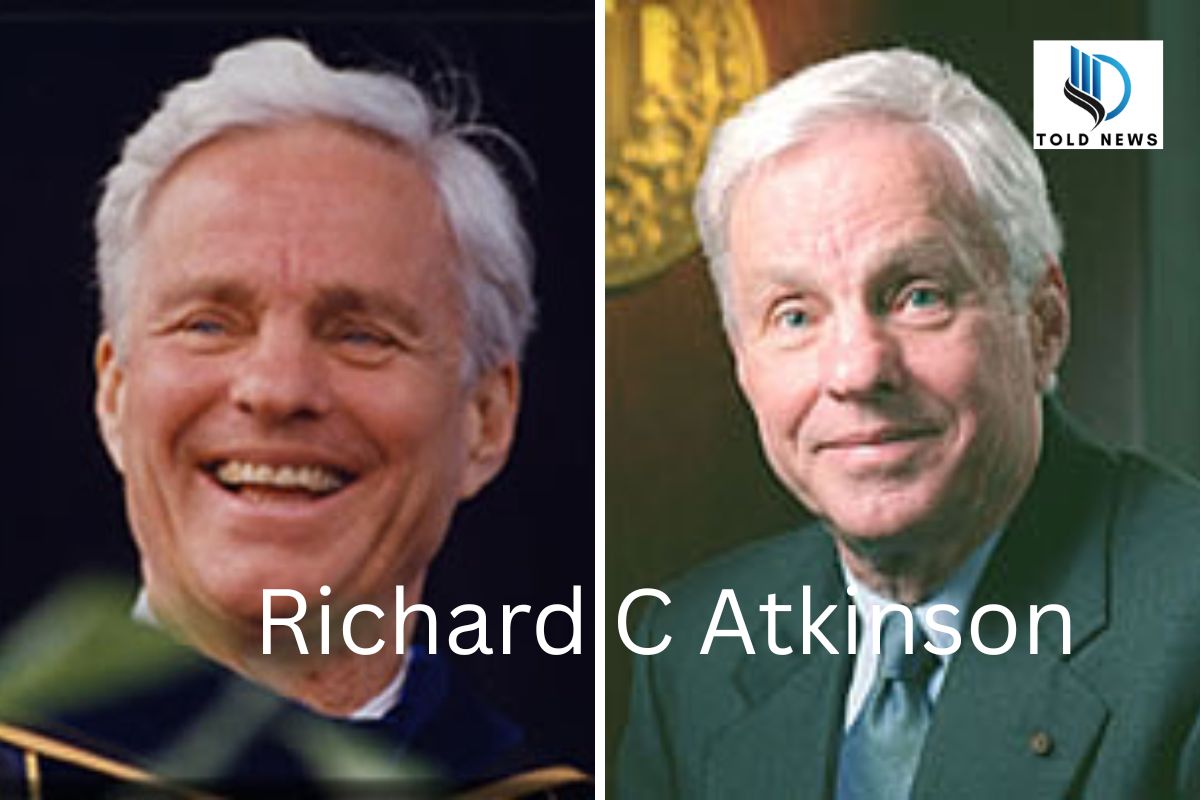
Richard C Atkinson stands as one of the most influential figures in American education and science policy. His life’s journey—from a cognitive psychologist to the president of the University of California system—reflects a remarkable dedication to academic excellence, research innovation, and fair educational access. Known for his groundbreaking contributions to psychology and his transformative leadership in higher education, Atkinson’s career embodies the power of knowledge and vision to change institutions and ideas.
Early Life and Academic Foundation
Childhood and Education
Richard Chatham Atkinson was born on March 19, 1929, in Oak Park, Illinois, United States. Growing up during a time of significant social and scientific change, he developed an early curiosity for understanding how people think and learn. His academic path began at the University of Chicago, where he earned his bachelor’s degree. Later, he completed his Ph.D. in psychology at Indiana University, focusing on cognitive science and experimental research methods.
Entry into Academia
After serving two years in the United States Army, Atkinson began his teaching career at Stanford University in 1956. His time at Stanford would become a defining chapter in his intellectual development. He worked closely with brilliant minds and contributed to research that shaped the field of psychology. His ability to blend scientific precision with educational insight became evident early in his career.
The Atkinson–Shiffrin Model of Memory
A Landmark in Cognitive Psychology
One of Atkinson’s most enduring legacies in science is the Atkinson–Shiffrin model of memory, developed with Richard M. Shiffrin in 1968. This model introduced a framework for understanding how memory operates through three primary components:
-
Sensory Memory: The initial stage where sensory input is recorded briefly.
-
Short-Term Memory: A temporary storage system for holding information in active use.
-
Long-Term Memory: The repository for information retained over extended periods.
The Model’s Lasting Impact
This model transformed the study of human memory by providing a clear structure for understanding how information is processed, stored, and retrieved. It continues to influence research in psychology, neuroscience, and artificial intelligence. Atkinson’s scientific contributions demonstrate his belief in combining theory with practical application—a philosophy that later defined his leadership in education.
Leadership in Science and Education
Director of the National Science Foundation
In 1977, Richard C Atkinson was appointed Director of the National Science Foundation (NSF) by President Jimmy Carter. During his tenure, he strongly defended the importance of basic research and the peer-review system. He emphasized that true scientific advancement comes from supporting curiosity-driven exploration rather than solely focusing on immediate applications.
Atkinson’s leadership at the NSF helped strengthen America’s scientific infrastructure. He fostered collaboration between universities, industries, and government agencies—laying the groundwork for the research ecosystem that drives innovation today.
Chancellor of UC San Diego
In 1980, Atkinson became the Chancellor of the University of California, San Diego (UCSD). Under his leadership, UCSD experienced extraordinary growth in both academic reputation and research funding. He championed initiatives to attract world-class faculty, expand the student body, and promote partnerships between academia and high-technology industries.
Atkinson recognized that modern universities must serve as both centers of learning and engines of innovation. His efforts at UCSD helped transform it into one of the world’s top public research universities.
President of the University of California System
Leading with Vision and Courage
In 1995, Atkinson became the President of the University of California (UC) system, one of the largest and most respected public university networks in the world. His presidency came at a critical time—California had recently banned the use of racial preferences in university admissions through Proposition 209.
Rather than accepting the potential loss of diversity, Atkinson initiated a bold review of admissions policies. He championed the idea of evaluating students based on their “opportunity to learn,” considering socioeconomic background, life challenges, and potential for success.
Reforming Admissions
In a landmark move, Atkinson questioned the fairness and effectiveness of standardized tests like the SAT in determining student potential. He proposed that universities should place greater emphasis on high school performance and contextual achievements. This decision sparked a nationwide debate on the role of standardized testing in higher education and inspired reforms across many institutions.
Expanding Research and Innovation
During his presidency, Atkinson strengthened the relationship between the UC system and California’s rapidly growing technology and biotechnology sectors. He encouraged research collaborations that advanced both scientific discovery and economic development. His administration also oversaw a surge in federal research funding, solidifying the UC system’s position as a global leader in innovation.
Achievements and Honors
Richard C Atkinson’s impact has been recognized through numerous awards and honors. He has been elected to the National Academy of Sciences, National Academy of Medicine, National Academy of Education, and the American Philosophical Society. In 2003, he received the Vannevar Bush Award for his exceptional contributions to science and technology policy.
The Atkinson Hall at UC San Diego stands as a tribute to his visionary leadership, while Atkinson Peak in Antarctica honors his contributions to science and education. His legacy continues to inspire future generations of scholars, educators, and policymakers.
Influence on Modern Education
A Champion of Equity and Excellence
Atkinson’s ideas have reshaped how universities assess merit and potential. His advocacy for fair and comprehensive admissions criteria has influenced educational institutions worldwide. By focusing on both opportunity and achievement, he helped make education more inclusive without compromising academic standards.
Legacy in Science Policy
His tenure at the National Science Foundation and the University of California established a lasting framework for integrating research, education, and innovation. Atkinson demonstrated that effective leadership in education requires both scientific understanding and social awareness.
Inspiration for Future Leaders
Through his long career, Richard C Atkinson has proven that one individual’s vision can transform entire systems. His legacy serves as a guide for educators, scientists, and policymakers striving to create equitable and forward-thinking institutions.
Conclusion
Richard C Atkinson’s life and career exemplify the perfect blend of intellect, leadership, and integrity. From developing one of the most influential psychological models to reshaping higher education, his work continues to echo across generations. He has redefined how society views learning, fairness, and innovation.
A true visionary, Atkinson’s contributions remind us that progress in education and science is not achieved through tradition alone but through the courage to question, to innovate, and to lead with purpose. His name will forever stand as a symbol of excellence and transformation in the pursuit of knowledge.