
Uncle Henry Knives: A Legacy of Craftsmanship, Heritage, and Timeless Design
Introduction
For generations, Uncle Henry knives have been more than just tools—they have symbolized craftsmanship, reliability, and American tradition. Whether carried by outdoorsmen, collectors, or those who simply appreciate fine cutlery, Uncle Henry knives have earned a reputation for quality and character that transcends time. From their origins in the early 20th century under the Schrade Cutlery Company to their global recognition today, these knives tell a story of innovation, passion, and enduring appeal.
History and Origin of Uncle Henry Knives
The history of Uncle Henry knives dates back to 1904, when the Schrade Cutlery Company was founded in Walden, New York. The company quickly gained fame for producing durable, well-crafted knives that became staples in the pockets of tradesmen, hunters, and adventurers across the United States.
The Uncle Henry name itself holds a special meaning—it was inspired by Henry Baer, the brother of Albert Baer, one of the key figures in Schrade’s success story. Albert Baer played a major role in expanding Schrade’s reach, and naming the brand after his brother was a nod to family values and integrity, qualities that became embedded in the brand’s identity.
Over time, Schrade evolved into Imperial Schrade Corporation, one of the most respected knife manufacturers in America. Their products, including the Uncle Henry line, became known for their traditional styling, smooth folding action, and dependable performance.
Transition and Brand Evolution
By the early 2000s, the knife industry faced growing competition from global manufacturers offering lower-cost alternatives. In 2004, Imperial Schrade closed its U.S. manufacturing facilities, marking the end of an era. However, the story of Uncle Henry knives didn’t end there.
The brand rights were acquired by Taylor Brands LLC, a Tennessee-based company specializing in the production and marketing of classic knife brands. Under Taylor Brands, the manufacturing of Uncle Henry knives shifted overseas, primarily to China. While this change stirred mixed reactions among collectors, it ensured that the Uncle Henry name continued to live on and reach new generations of knife enthusiasts.
Even today, older U.S.-made Uncle Henry knives remain highly collectible, often prized for their build quality and nostalgic value. Meanwhile, the modern imported versions still capture the traditional designs that made the originals famous, ensuring the legacy continues.
Design and Craftsmanship
Classic Aesthetics
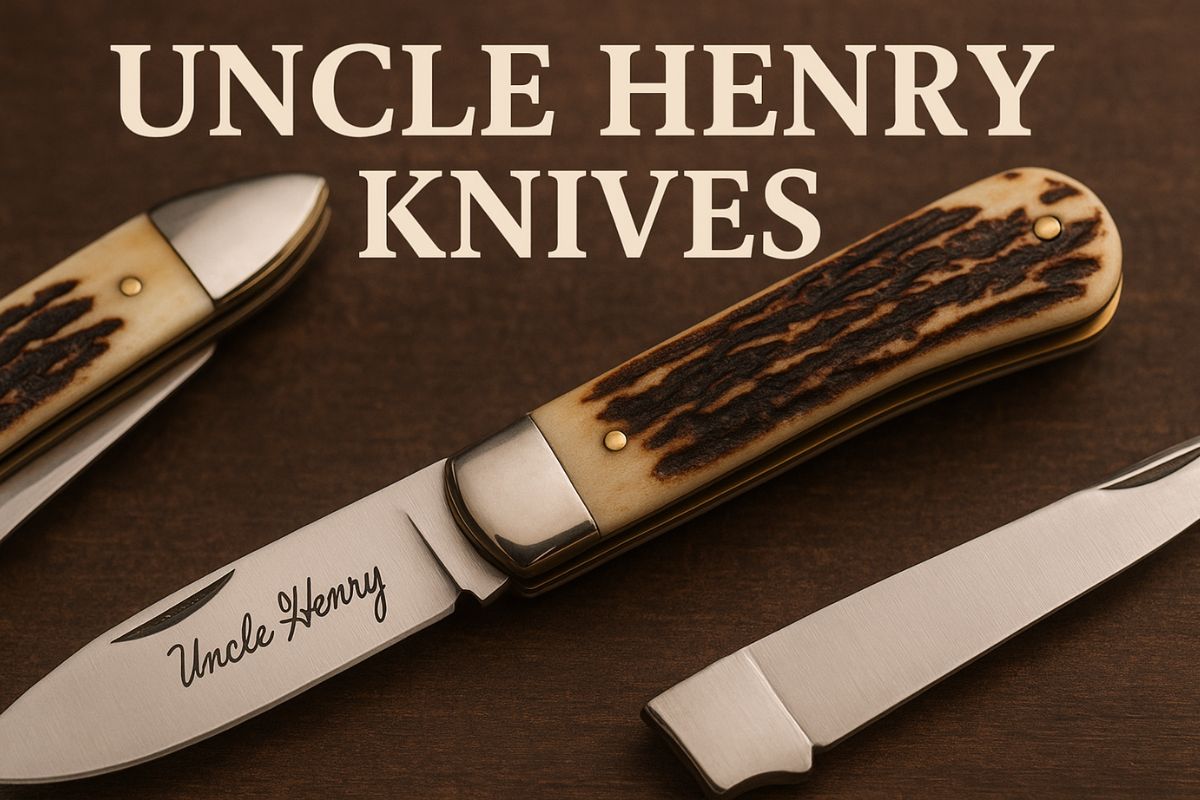
One of the defining features of Uncle Henry knives is their classic look and feel. Many models feature staghorn or imitation stag handles, brass liners, and nickel-silver bolsters, reflecting a timeless hunting knife aesthetic. These visual details give the knives a rustic charm that appeals to collectors and outdoorsmen alike.
Functional Excellence
Beyond their looks, Uncle Henry knives are built for functionality. Each blade is designed for real-world use, whether it’s for skinning game, carving wood, or handling everyday cutting tasks. The steel used in the blades provides a balance between edge retention and ease of sharpening—a crucial feature for practical users.
Variety of Models
Uncle Henry knives come in a range of models to suit different needs:
-
Folding Pocket Knives – Compact and easy to carry, ideal for everyday tasks.
-
Fixed Blade Knives – Strong and reliable, perfect for hunting, camping, and outdoor survival.
-
Multi-Tools and Specialty Blades – Designed for versatility, offering multiple functions in one tool.
Each knife carries the same spirit of reliability that made the brand a favorite among generations of knife users.
Collectibility and Value
Vintage Appeal
Collectors are especially drawn to vintage Uncle Henry knives produced before 2004, when manufacturing was still based in the U.S. These models often feature high-quality materials and distinctive craftsmanship that reflect a bygone era of American knife-making. Many collectors seek out models like the LB7 Bear Paw, Golden Spike, and Senior Rancher, which have become classics in the knife community.
Modern Market Presence
While newer Uncle Henry knives are manufactured overseas, they remain popular due to their affordability and adherence to traditional designs. Taylor Brands has done well to preserve the spirit of the originals, ensuring that new buyers can still enjoy the look and utility of an Uncle Henry knife without paying collector prices.
Rarity and Condition
When it comes to value, rarity and condition are key. U.S.-made models in mint or near-mint condition, particularly those with original packaging or limited-edition releases, can fetch significant prices among collectors. Enthusiasts often search for knives marked “Schrade USA,” a hallmark of authenticity and quality.
Legacy and Cultural Significance
The legacy of Uncle Henry knives extends beyond the workshop or display case. For many people, these knives carry emotional and nostalgic value. They’re the kind of knives passed down from father to son, carried on hunting trips, or remembered from early outdoor adventures.
Uncle Henry represents a connection to a simpler time—a period when tools were made to last and built with pride. Even though production has moved abroad, the essence of the brand remains deeply rooted in American culture and craftsmanship. The knives continue to symbolize tradition, reliability, and an unbroken bond between generations of knife users.
Care and Maintenance
Proper maintenance is essential for preserving both the beauty and functionality of an Uncle Henry knife. Regular cleaning, oiling the joints, and sharpening the blade are vital steps in ensuring longevity. For collectors, storing the knife in a dry environment and avoiding prolonged exposure to moisture helps prevent corrosion and damage to handle materials.
Whether vintage or new, caring for an Uncle Henry knife keeps its performance sharp and its story alive.
Why Uncle Henry Knives Still Matter Today
In an age dominated by modern technology and mass production, Uncle Henry knives stand as a reminder of heritage, craftsmanship, and authenticity. They continue to embody the spirit of the outdoors, appealing to those who value practicality and tradition over trends.
From seasoned collectors to first-time buyers, the appeal of Uncle Henry knives lies in their ability to bridge generations, offering both function and sentiment in every blade. As long as there are people who value craftsmanship and history, the name Uncle Henry will remain etched in the world of fine cutlery.
Conclusion
Uncle Henry knives are not just cutting tools—they are a symbol of timeless craftsmanship and enduring American heritage. From their origins with Schrade to their modern-day evolution under Taylor Brands, they represent a legacy that continues to inspire trust, nostalgia, and pride. Whether you carry one in your pocket, display it in your collection, or simply admire its design, each Uncle Henry knife tells a story—a story of tradition, quality, and a legacy that continues to cut through generations with pride and precision.